
What does rekeying a lock actually mean?
Inside most door locks is a small cylinder with a row of spring-loaded pins. Each pin is cut to a set length that matches the cuts on your key. When the right key goes in, the pins line up and the cylinder turns.
Rekeying means a locksmith takes the cylinder apart and swaps those pins for a new set that matches a new key. The lock body, handle, deadbolt and finish all stay on your door. Once it's done, every old key stops working, and you get new keys cut for the new pins.
Replacing means taking the whole lock off the door and putting in a new one. You get new hardware and new keys at the same time.
Some Kwikset locks use SmartKey, a cylinder you can rekey yourself with a small tool and the current working key. If you have both, it is a fair DIY job. Without the working key, you need a locksmith.
When is rekeying enough?
Rekeying is the right call when your locks work well and the real problem is who has a key. Common situations:
- You just moved in. You have no way of knowing how many copies the last owner, their family, their dog walker or past contractors still have.
- You lost your keys. Especially if your address was on something in the same bag, or you lost them somewhere public like a TTC station or a gym.
- A tenant, roommate or ex moved out. Even if they hand back their keys, copies are cheap and easy to make.
- A contractor, cleaner or renovation crew had a key. When the job is done, rekeying closes that chapter.
- You want fewer keys. If your locks share a brand and keyway, they can often be rekeyed to one key (more on that below).
A typical Toronto house has a front door, a back or side door and maybe a garage entry. Our lock rekeying service can usually handle all of them in one visit.
When should I replace my locks instead of rekeying?
Rekeying only changes who can open the lock. It does nothing for a lock that is weak, worn out or broken. Replace it when:
- The lock was forced or damaged. After a break-in or an attempt, a bent bolt or cracked cylinder needs new hardware. Have the frame and strike plate checked too.
- The key sticks or the bolt drags. Some wear can be fixed with a lock repair, but a worn-out lock can cost more to keep fixing than to replace.
- The hardware is low grade. Some builder-grade locks are ANSI/BHMA Grade 3, the lightest residential grade. Moving to a Grade 2 or Grade 1 deadbolt is a real upgrade.
- You want a smart lock. A keypad or app lock is new hardware. See smart lock installation.
- You want tighter key control. High-security cylinders from Medeco, Mul-T-Lock, Abloy or ASSA resist picking and use restricted keys that can't be copied at a hardware store kiosk. See high-security keys.
- The lock can't be rekeyed sensibly. Some cheap locks are not made to be taken apart, and parts for some old or discontinued locks are hard to find.
- You want mixed brands on one key. A Schlage key will not fit a Kwikset keyway, so at least one lock may need a new cylinder or a full replacement.
When you do replace, our lock change service covers taking off the old hardware and fitting the new lock to your door.
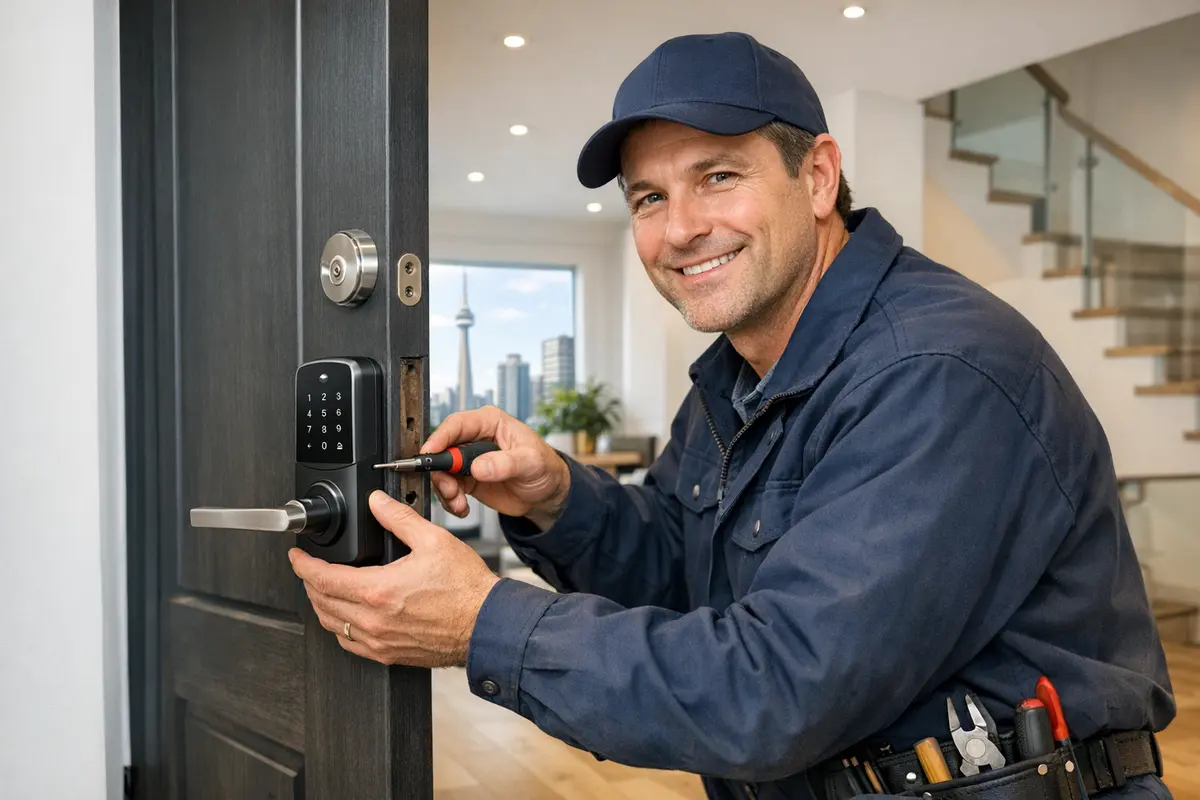
Rekey vs replace: what's the difference side by side?
| Question | Rekey | Replace |
|---|---|---|
| What changes? | The pins inside the cylinder | The whole lock: cylinder, bolt, handle or keypad |
| Do old keys still work? | No | No |
| When does it fit? | The lock works well and you need to control who has keys | The lock is damaged, worn or low grade, or you want new features |
| Time on site | Usually short, often a few minutes per cylinder | Longer, especially if the door needs new holes or a smart lock needs setting up |
| Hardware kept? | Yes, everything you see on the door stays | No, you get new hardware |
| Relative cost | Usually cheaper: labour and new pins | Usually more: the new lock plus installation |
Your price depends on how many locks you have, the brand, and whether parts are needed. We confirm it before any work starts, so you are never guessing.
Can I get all my locks on one key?
Usually, yes. This is called keying alike. A locksmith rekeys every cylinder to the same pin set, so one key opens your front door, back door and deadbolts.
The catch is the keyway, the shape of the slot the key slides into. Locks have to share a keyway to share a key. Kwikset and Schlage use different keyways, so a Kwikset handle and a Schlage deadbolt can't be keyed alike as they are. Your options:
- Rekey the locks that already match and leave the odd one on its own key
- Replace the odd lock with the same brand as the others
- Swap in a matching cylinder, where the lock allows it
Check before you call. The brand is usually stamped on the face of the lock. If every door has the same brand, keying alike is normally simple.
Can I rekey the locks in a condo or rental in Toronto?
In a condo, you can usually rekey or replace the lock on your own unit door. The lobby doors, garage, mail room and fobs belong to the condo corporation, and only the property manager can change those. Check your building's rules too, since some condos ask owners to keep a key on file or use a certain type of lock.
If you rent, Ontario's rules say a tenant should not change or rekey the locks without the landlord's consent, and a landlord who changes the locks must give the tenant new keys. If you are a landlord, rekeying between tenants is a quick way to make sure the last tenant's keys stop working. Managing several units? See our property manager services.
Updated . Written by the LocksmithGT team, a mobile locksmith serving the City of Toronto. This guide is general information, not legal advice.