
Why is my lock sticking or hard to turn?
Start with one quick test. Open the door and turn the deadbolt. If it's smooth with the door open but stiff with the door closed, the lock is fine. The door has moved, and the bolt is rubbing on the strike plate. That changes the fix completely.
| What you notice | Likely cause | What to try first |
|---|---|---|
| Smooth when open, stiff when closed | Door has sagged or the frame shifted | Push or lift the door while turning the key. If that helps, see the latch section below. |
| Key is hard to push in or pull out | Dirt or old grease in the cylinder, or a worn key | Puff a little graphite or dry lock lubricant into the keyhole and work the key in and out. Try your spare key. |
| Key goes in but won't turn at all | Wrong key, broken pin, or a jammed cylinder | Make sure it's the right key. Don't force it, because keys snap. Call us. |
| Lock turns but the door won't open | Broken latch spring or cam inside the lock | Call us. This needs parts or a new lock. |
| Stiff only in winter | Moisture freezing inside, or a wood door shrinking | See the frozen lock section below. |
Skip oil and WD-40 in a door lock. They leave a sticky film that grabs dust and gums up the pins. A puff of graphite or a dry Teflon lock spray from the hardware store works better.
What should I do if my lock is frozen?
Frozen locks are a Toronto winter classic, especially after freezing rain or when warm air leaks through a drafty door and condenses inside the lock. Try this, in order:
- Spray lock de-icer into the keyhole. Keep a can in your bag or car, not in the house.
- Warm the key in your hand or with a hair dryer, then slide it in gently and wait a few seconds.
- Hold a hair dryer on the lock itself if you can reach an outlet.
- Work the key back and forth with light pressure. Stop if it bends.
Don't pour hot water on the lock. It works for a minute, then refreezes harder and can rust the pins. Once it's working, a shot of dry lubricant in the fall helps keep moisture out for the season.
If you still can't get in and it's minus twenty outside, call us. Our home lockout service can get you inside and fix the lock in the same visit.
Need lock repair now? A real person answers 24/7.
Call (647) 367-8113How do I fix a door that won't latch or a deadbolt that won't line up?
Doors move. Old houses settle, hinges loosen, and Toronto's humid summers and dry winters make wood doors swell and shrink. When the bolt or latch no longer meets the hole in the strike plate, the door won't latch or the deadbolt won't throw.
Things you can try:
- Tighten every hinge screw. A loose top hinge is the most common reason a door sags.
- Replace one screw in the top hinge with a 3-inch screw that reaches the wall framing. It pulls the door back up toward the frame.
- Look at the strike plate for shiny scratch marks. They show which way the bolt is missing the hole.
If that doesn't do it, we move or file the strike, deepen the strike hole, shim hinges and adjust the latch so everything lines up again. A split frame from a past break-in needs more than an adjustment. See home security upgrades for that.
Why is my door handle loose, and can I fix it myself?
Often, yes. Most knobs and levers are held by two screws on the inside, and they loosen with daily use. Tighten them, but not so hard that the latch starts to bind.
Some knobs have no visible screws. Look for a small slot or pin on the neck of the inside knob. Press it with a small screwdriver to pull the knob off, then tighten the screws underneath.
If a lever droops and won't spring back, the return spring inside is broken. If the handle spins without moving the latch, a part inside has snapped. Both usually mean a new lockset, which we can match to your current key.
When is a lock not worth repairing?
We always try repair first. But a new lock makes more sense when:
- It's a basic Grade 3 lock that's worn out, and new parts cost close to a new lock
- The cylinder spins freely or was damaged in a break-in attempt
- Parts for that model aren't made anymore
- You wanted to upgrade anyway, for example to a keypad
Older mortise locks in heritage homes are the opposite. They're usually worth servicing, because replacing them means rebuilding the door. If you do want new hardware, see lock change.
What happens when you call?
Tell us the symptom
Sticking, frozen, won't latch, loose handle or key won't turn. Mention if it's only when the door is closed.
Try a quick fix with us
Dispatch may walk you through a simple check on the phone. If it works, there's no visit.
Diagnose at the door
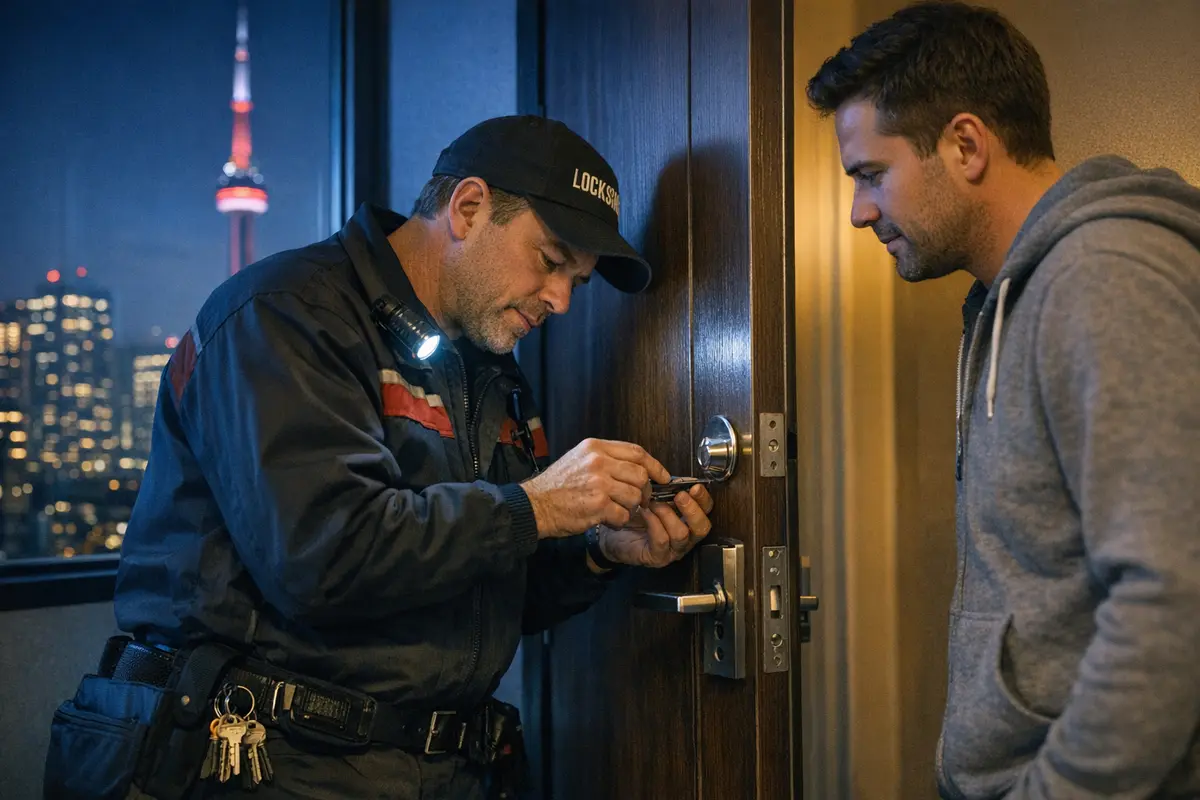
The technician checks the lock and the door alignment and confirms the price before starting.
Repair and test
We clean, adjust or rebuild the lock, line up the strike, and test it closed with every key you have.
Page reviewed October 2026 by the LocksmithGT team.